
Alpena County Arrest Reports
The best multi-day source is a newspaper. The Alpena News, not a county government feed, publishes the clearest example: its February 2024 Alpena County police blotter covers a seven-day stretch of Sheriff's Office activity. The piece groups complaints, warnings, follow-ups, traffic stops, and arrests. Five arrests appear that week. The rest was far broader police work. A weekly activity count is not a jail log. Names, booking numbers, charge detail, and booking photos may be missing, and incidents that never lead to custody can sit beside arrests that do. Save the outlet, article date, and exact reporting period whenever you use a count.
The source format appears in this Alpena News blotter capture.
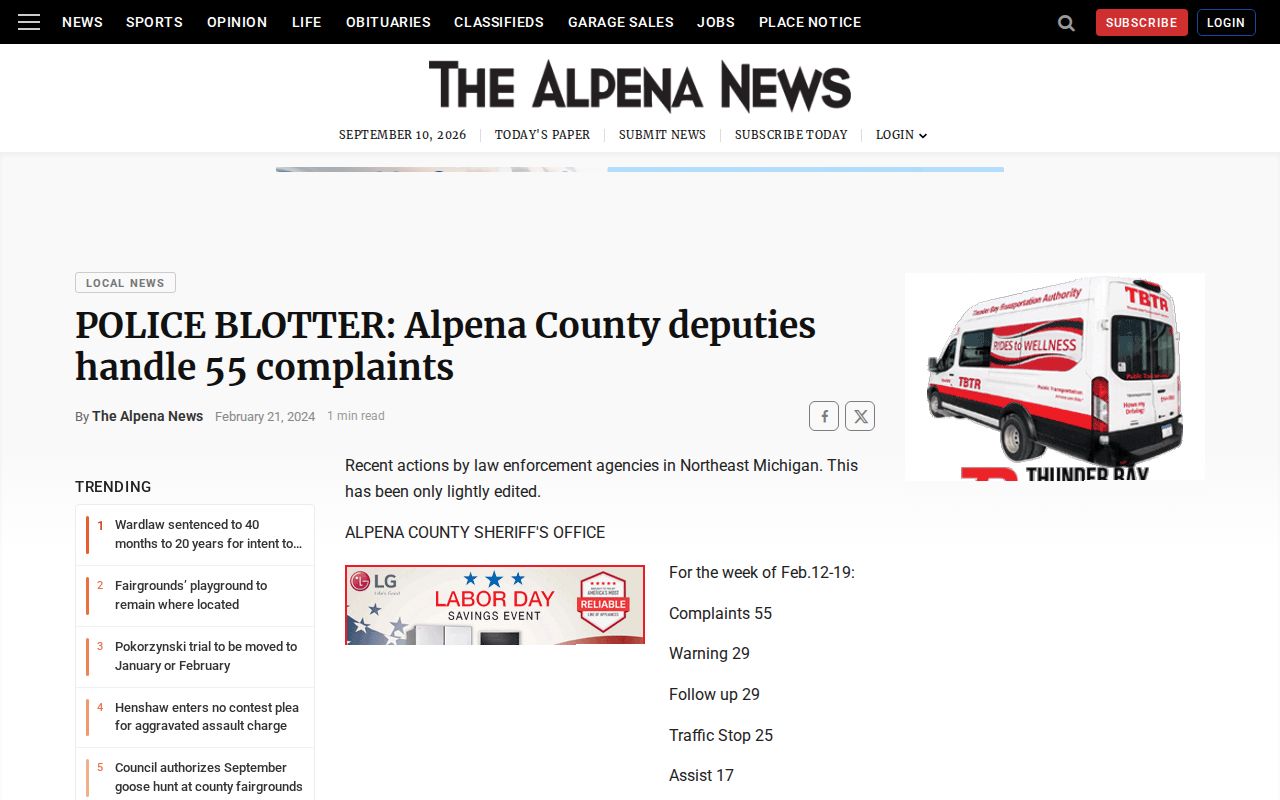
The Alpena News blotter shown here is a news product, separate from the county's official current-inmate roster.
Read Alpena Arrest Blotters
Start with the question you actually need answered. A blotter tells you what activity the paper summarized over its printed interval, not whether a named person sits in the Alpena County jail right now.
- Read the headline, publication date, and stated start and end dates.
- Identify the agency whose activity is summarized.
- Separate arrests from calls, stops, warnings, and follow-ups.
- Treat linked arrest stories as selected reporting, not a full booking list.
- Verify custody through the official roster and the case through the court.
- Request agency records for a complete or older date range.
The Arrested Today page handles the separate same-day question. It starts with current custody, since a periodic article cannot show who is held now.
Alpena Arrest Report Fields
Fields depend on the source. A weekly blotter gives an activity summary, while a news story may add names, alleged conduct, quotes, or a court event, so keep the source type visible.
| Element | Meaning and limit |
|---|---|
| Reporting period | The dates covered, which differ from publication date. |
| Agency | The office summarized; it may not own the jail record. |
| Activity totals | Calls, stops, warnings, follow-ups, and arrests are different events. |
| Arrest count | A period total, not a name-by-name roster. |
| Narrative | Selected context from releases, court coverage, interviews, or records. |
| Photo | Not guaranteed and may be a file or video image, not a booking photo. |
| Court event | An arraignment or hearing, not a final disposition. |
For the underlying booking, use Alpena County's Corrections & Jail page. Current custody rolls off after release, which is why a dated report and a live roster answer different questions.
Alpena Weekend Report Timing
No source shows an Alpena County weekend arrest surge. No Monday update is promised either. The newspaper example simply uses a seven-day reporting period, and a periodic article appears after some of the events it describes. Weekend incidents count inside the printed dates. Assume no Monday-through-Sunday pattern. Holiday timing needs the same care. County office hours are not a roster-refresh schedule, and newspaper publication time is not jail booking time. For immediate custody, check the county roster or call 989-354-9830. For a full historical interval, request booking records. A late report should stay attached to the dates it covers. Moving it to the publication week distorts apparent trends. The same caution applies when several days of calls are combined, since more complaints or stops does not prove more arrests. An arrest count also never states how many people entered Alpena County Jail.
Archive Alpena Arrest Records
Alpena County posts no archive of daily booking snapshots. Newspaper pages can change, receive corrections, or vanish. Save the URL, headline, publication date, stated reporting window, and source agency. Those facts support a later records request.
Michigan's GS11 retention schedule offers a better map of record series. Jail booking and control-center logs are kept through calendar year end plus seven years. Daily count summaries with intake and release names last through year end plus one year. Inmate jackets run ten years after release. Those may hold booking cards, mug shots, bonds, release data, and warrants. These are retention rules, not promises of online access.
Send a focused request through Alpena County FOIA. Name the record series, office, and exact date range, and ask for public portions with redaction where needed. The county can clarify scope, estimate fees, extend a response, or withhold exempt material. The county FOIA procedures page walks through the process.
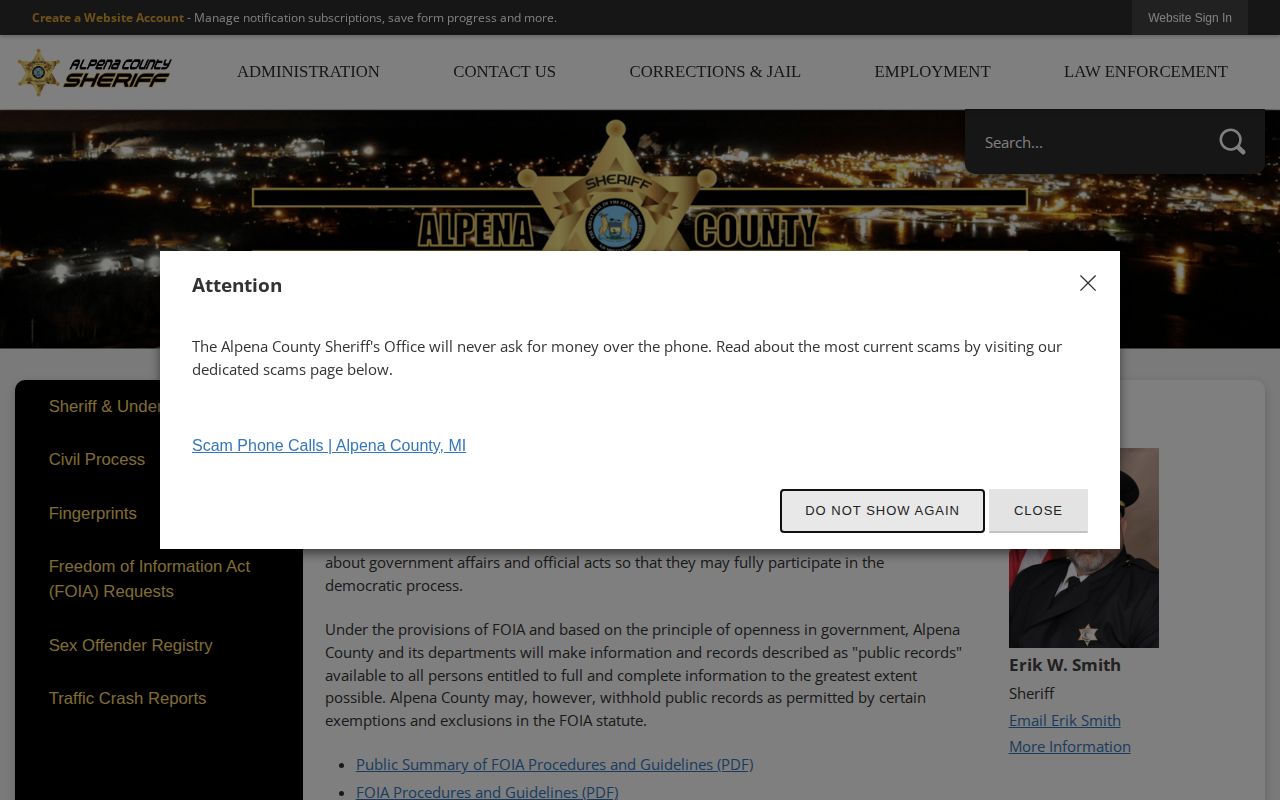
The FOIA route reaches past current windows. Note: A retention period is not a web-publication period, and exemptions may govern access to a record the agency still holds. Much older records follow a different path. The Archives of Michigan Alpena County guide lists historic prison arrest and detention logs. It also covers circuit criminal calendars, case files, and dockets from earlier eras. Those series are not modern arrest reports. They cannot answer current custody. They can, however, frame a historical inquiry once county retention periods and online news coverage no longer reach the event.
Selected Alpena Arrest Narratives
The Alpena News covers selected arrests in longer form. One example is its armed-home-invasion report, which follows an Alpena County arrest from the first police account. Another story traces a case into the courtroom. Its arraignment coverage shows that later stage, where the charge is stated and bail comes up. A narrative like this names the reporting agency and adds detail a roster card never carries. Selection is editorial, though. Not every arrest gets a story. Images deserve a second look. A news photo may come from jail video or a file image rather than an official booking photograph, so the picture and the roster entry should be read as two different things.
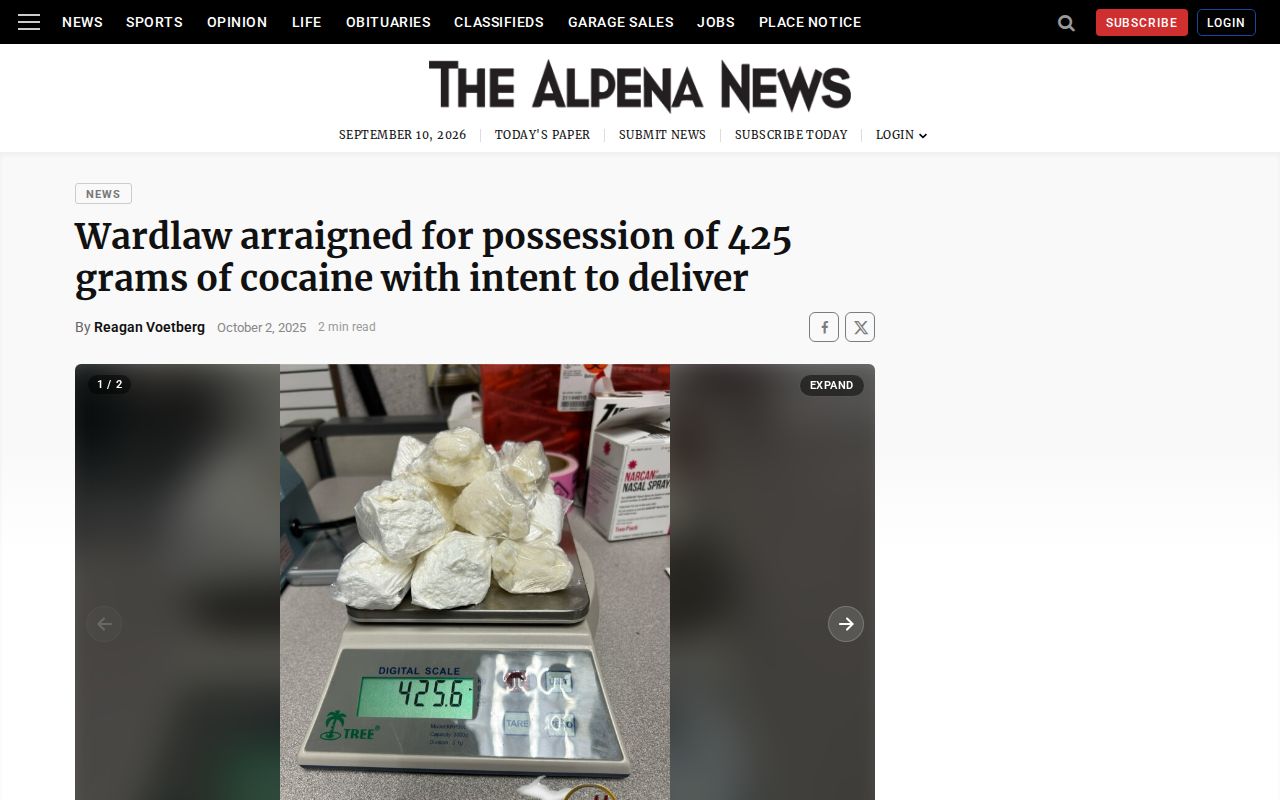
Booking, arraignment, and final disposition are separate stages.
Records Behind Alpena Reports
Local reporting can draw on more than an agency press release. The Alpena News has used requested video and records for accountability stories about area agencies. That is deeper work than copying a booking card. It explains evidence and procedure. Still, a dated news report is its own product with its own correction process, so treat it as journalism rather than a court file.
Follow the record to its owner. The 88th District Court starts adult criminal cases and handles misdemeanors, felony arraignments, warrants, bail, and preliminary examinations. Serious cases climb to the 26th Circuit Court. MiCOURT is informational only. The clerk keeps the official file.
Ownership splits inside Alpena County too. Alpena Police may hold an incident report even when the jail holds the booking entry. A Hillman event may belong to Montmorency County or the state police rather than a city force. State prison custody sits with MDOC. Name the office before you request anything, since a place name in a story does not tell you who made the arrest.
News articles carry correction histories. Dates matter here. When a story and an official record disagree, keep both dates and ask the source that created the primary record. A dismissal or amended charge changes the full procedural picture. The earlier report does not vanish, but it stops being the last word.
Label your notes neutrally. Booking means jail intake. Arraignment is the early hearing where the charge is read and release terms may come up. Bond is a release condition, and disposition is the later court outcome.
Photos do not settle the source question. Alpena's official roster has displayed booking images, while news coverage may run a different kind of picture. A missing photo does not mean no arrest happened. An image in a story is not automatically a mugshot. Cite the official source and describe what it shows.
Third-party summaries are unnecessary for the weekly pattern. Start with official county records and the identified local newspaper. A secondary report can be stale, selective, or flat wrong, so weigh it against the jail, the responsible police agency, and the court. That order matters most after release, when the current roster no longer shows the old booking.